Healthiest Meal Plan for a Day: Simple Balanced Menu
What is the healthiest meal plan for a day?
The healthiest meal plan for a day is one that balances steady energy, adequate protein, fiber-rich carbs, and healthy fats—while keeping added sugar and ultra-processed foods low. A simple way to build it is to center each meal on whole foods: vegetables and fruit, lean proteins, minimally processed grains or starchy vegetables, and unsaturated fats (like olive oil, nuts, seeds, or avocado). Portions and calorie needs vary by age, activity level, and health goals, but the structure stays consistent.
A balanced, realistic one-day meal plan
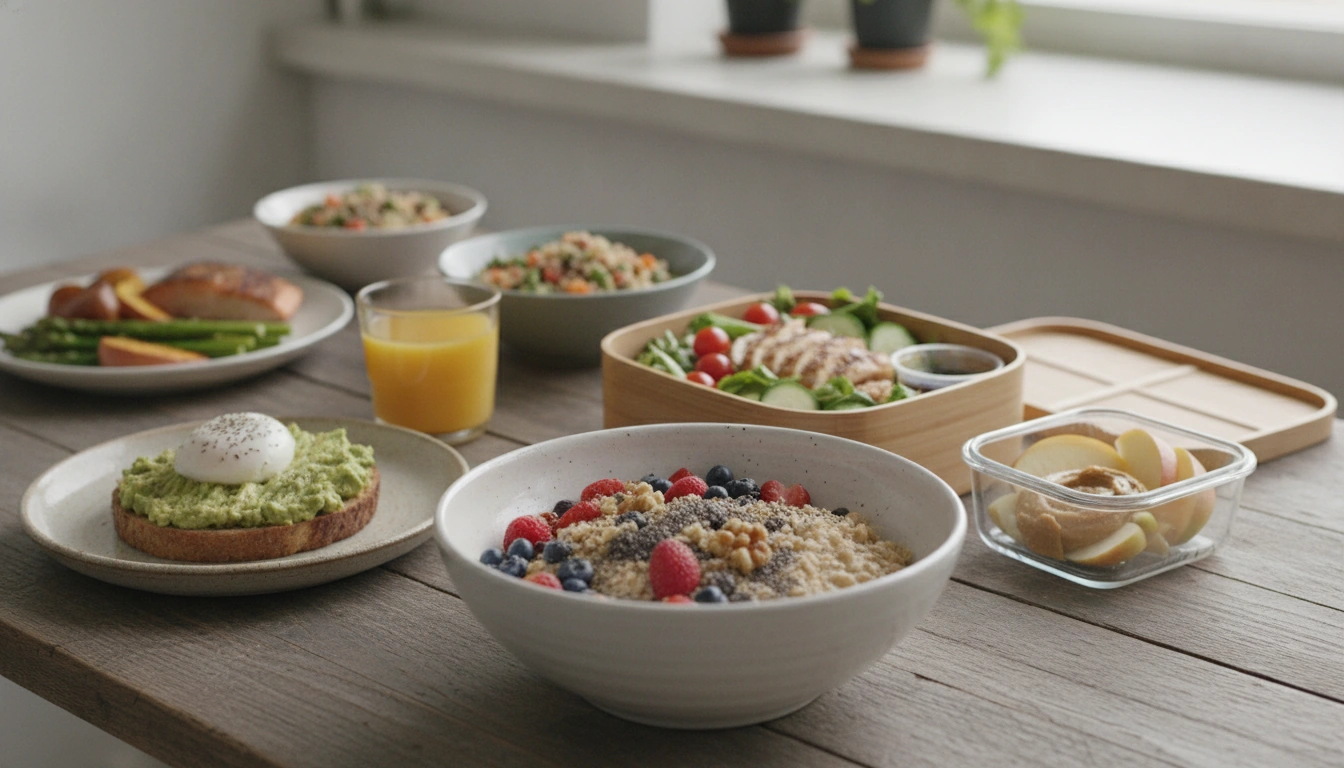
Breakfast: Greek yogurt (or a high-protein dairy-free yogurt) topped with berries, a tablespoon of chia or ground flax, and a small handful of walnuts. Add a slice of whole-grain toast if you need more staying power.
Mid-morning snack (optional): An apple or pear with peanut butter, or a small portion of cottage cheese with cucumber slices.
Lunch: A large salad bowl with mixed greens, colorful veggies, quinoa or brown rice, and a protein like grilled chicken, salmon, tofu, or beans. Dress with olive oil and lemon; add pumpkin seeds for crunch.
Afternoon snack (optional): Hummus with carrots and bell peppers, or edamame with a pinch of salt and pepper.
Dinner: Baked fish or roasted tofu, roasted vegetables (broccoli, zucchini, peppers), and a fiber-rich carb like sweet potato or farro. Finish with fruit if you want something sweet.
Key rules that make it “healthy”
Aim for 20–35 grams of protein at each meal, at least one fist-sized serving of vegetables twice daily (more is better), and a consistent water routine throughout the day. If weight management is a goal, keep liquid calories low and prioritize higher-volume foods (vegetables, beans, broth-based soups) that help fullness.
For more meal-planning examples and practical tips, visit https://epicgemsstudio.shop/what-is-the-healthiest-meal-plan-for-a-day/.
FAQ
What are the best healthy snacks to include in a daily meal plan?
Choose snacks that combine protein and fiber, such as fruit with nut butter, hummus with vegetables, yogurt with berries, or a handful of nuts plus a piece of fruit. These help keep blood sugar steadier than refined carbs alone.












Leave a comment